
Technical Articles · 5 September 2026 · 8 min
What telemetry tells a karting coach
A speed trace is not a lap time. It is an explanation of one. Here is how a coach reads a corner — entry, minimum, exit — and turns three numbers into a coaching instruction.
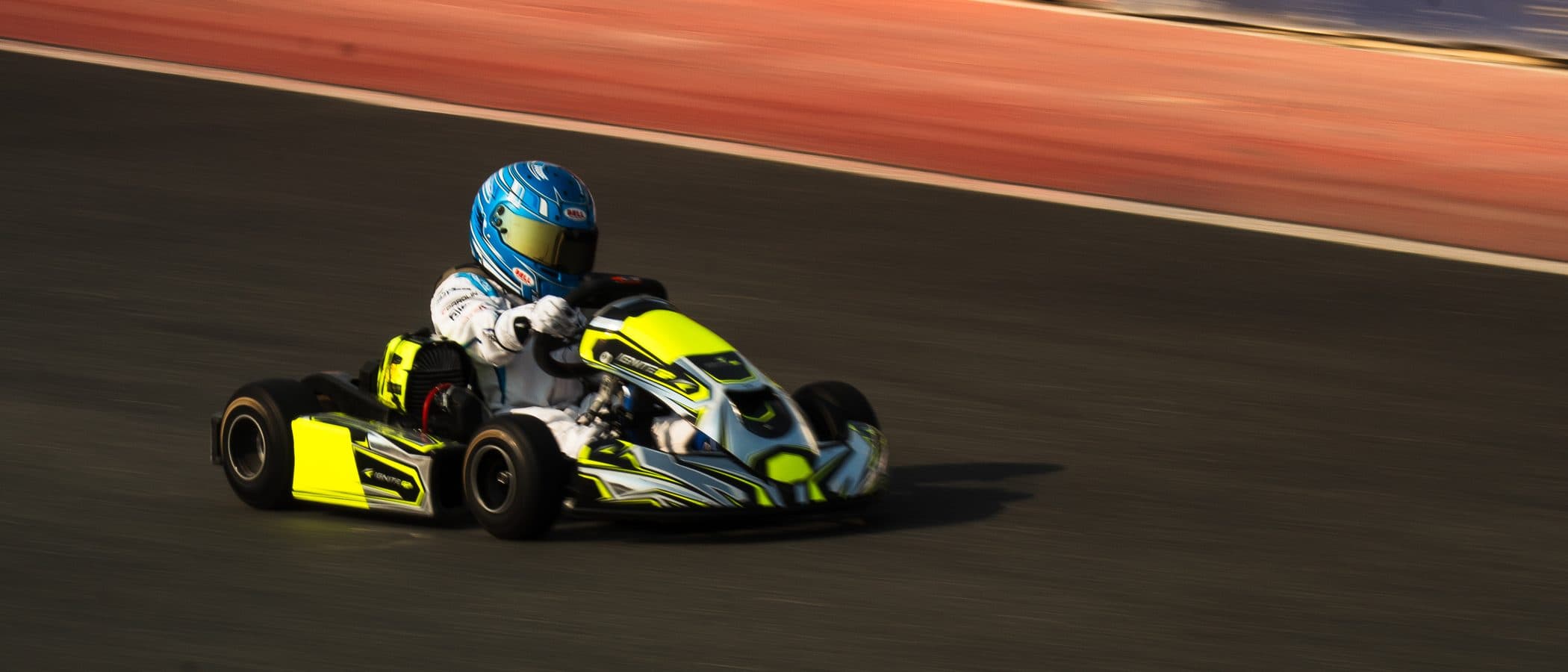
Every kart in Ignite's programme above Rookie level runs a data logger and an onboard camera. The camera shows what the driver did. The data shows what it cost. Reading the two together is most of what a race engineer does on a Saturday afternoon.
The three numbers that matter in a corner
Take Turn 1 at the Kartdrome. A young driver enters at 63 km/h, bottoms out at 47 and exits at 58. The coach's reference lap enters at 64, bottoms out at 50 and exits at 61. One km/h on entry is nothing. Three km/h at the minimum is the whole story: the driver is over-slowing the kart, usually by holding the brake a fraction too long or turning in a fraction too early. The exit deficit follows automatically, and it is carried all the way down the next straight. Total cost: around 0.14 seconds — in a single corner.
Why minimum speed beats braking point
Parents watching from the fence tend to fixate on braking points, because they are visible. Coaches fixate on minimum corner speed, because it is where the time is. A driver who brakes early but releases the brake progressively and carries speed through the apex will almost always be quicker than one who brakes late and stops the kart in the middle of the corner. The trace makes this argument in a way that words cannot.
Overlaying laps
The most useful comparison is not driver versus coach but driver versus driver: this lap against their own best. Overlaying the two shows where a personal best came from — and it is almost never from bravery. It is from consistency: the same braking release, the same line, the same throttle application, corner after corner. Consistency is the first thing Ignite scores in a driver's development profile for exactly this reason.
What we look at, in order
- Speed trace: minimum corner speed and how quickly speed recovers on exit
- GPS line: turn-in and apex points against the reference
- RPM: whether the engine is being used in the right part of its range, and where the driver is losing revs on exit
- Sector times: which part of the lap is improving and which is not
- Onboard video: the hands, the head, the moment of brake release
What the data cannot do
It cannot teach. A trace shows where three km/h went missing; it does not put them back. That is coaching — a specific, practicable instruction, tried in the next session, checked in the next trace. Data tells us where the time went. Coaching teaches the driver how to find it.
