
Parent Guides · 6 September 2026 · 5 min
Rental karting vs racing karting: what is the difference?
They share a name and not much else. Understanding the difference explains why a child who is quick at the leisure track may still be a beginner in a racing kart — and why that is fine.
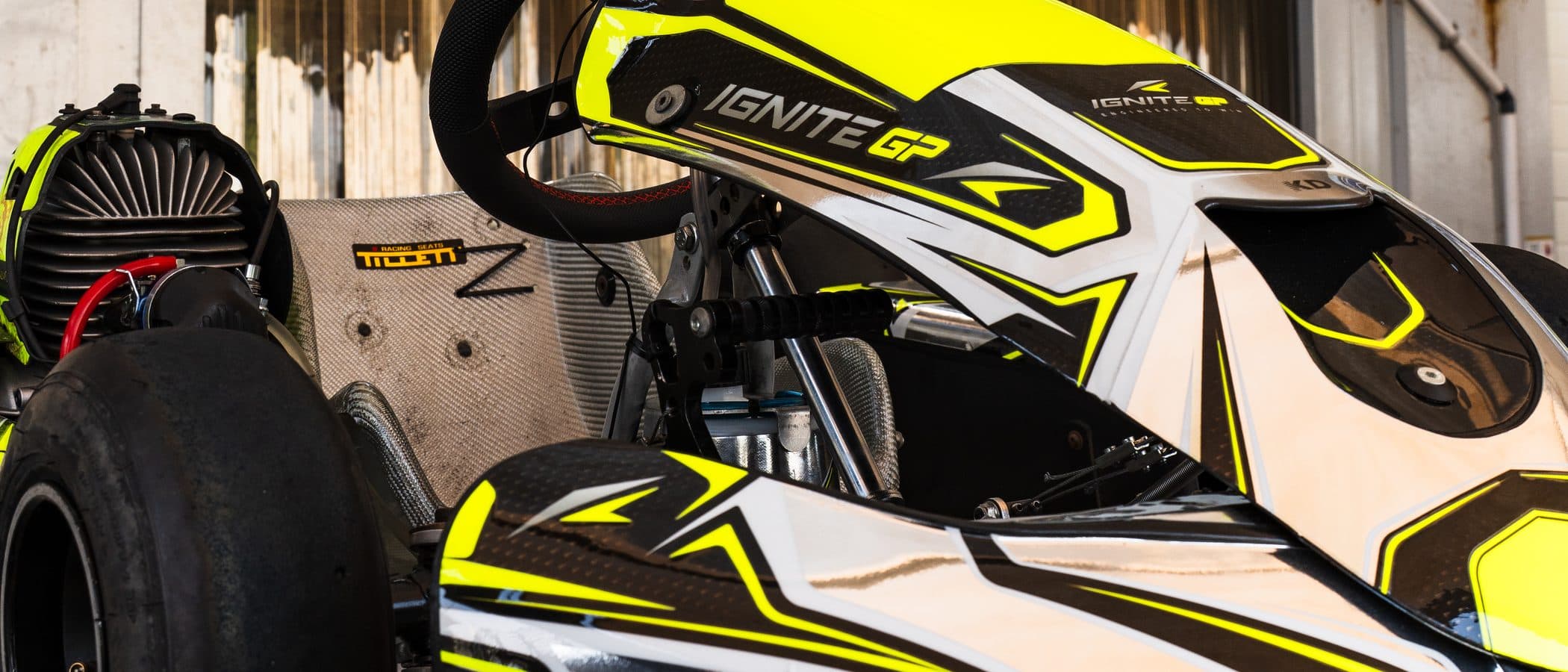
A rental kart is built to survive: heavy, bumpered, governed to a safe speed and driven by thousands of people a year with no instruction. A racing kart is built to be fast: light, responsive, tuned, and driven by one person who is coached to get the most from it. The experience of driving each is entirely different, and so is what a child learns.
What changes
- Weight and response: a racing kart reacts to small steering and pedal inputs that a rental kart ignores — which is precisely why technique matters
- Braking: racing karts brake on the rear only in the junior categories, and learning to release the brake progressively is the first real skill
- Speed and grip: proper racing tyres generate grip a rental kart never will, and the driver has to learn to trust it
- Preparation: a racing kart is set up — seat position, tyre pressures, gearing — for the driver and the circuit
What rental karting is good for
Fun, and a first sign of interest. Many Ignite drivers were first noticed by a parent at a leisure circuit. Rental lap times are not a reliable indicator of ability in a racing kart, in either direction — so do not be discouraged if a child who dominates at the leisure track is suddenly cautious in a Bambino kart, and do not assume a slow rental driver has no future.
Making the step
Ignite's First Drive is designed for a child who has never sat in a racing kart, and the Rookie tier of the Academy assumes no prior technique. There is no rental-karting prerequisite and no disadvantage in skipping it entirely.
